Why Lemon Tea is the Creative Font You've Been Looking For
There are moments in every creative project where you hit a wall. You have the concept, the color palette, the imagery, but the typography feels… off. It's either too rigid, too generic, or too ornate. You need something that bridges the gap between casual warmth and polished elegance. Enter Lemon Tea, a handwritten font that feels less like a digital asset and more like a piece of crafted art. It's the kind of typeface that doesn't just display words; it delivers them with personality.
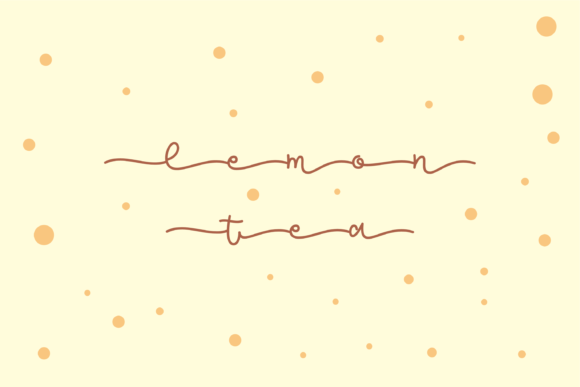
At first glance, Lemon Tea presents itself as a delicate, flowing script. The characters are built with a natural, balanced rhythm that mimics the fluidity of ink on paper. Unlike some display fonts that sacrifice readability for style, this typeface maintains a well-balanced structure. The letterforms are connected with care, ensuring that the text flows smoothly without becoming a tangled mess. This is modern typography at its most approachable—it’s sophisticated enough for high-end branding but inviting enough for a personal blog header.
The Personality Behind the Letterforms
Every font carries a mood, and Lemon Tea speaks with a voice that is both gentle and confident. It avoids the common pitfalls of many script fonts. It is neither overly scratchy nor artificially bubbly. Instead, it strikes a middle ground that feels authentic. This authenticity is crucial for designers and entrepreneurs trying to build a genuine connection with their audience.
When you apply Lemon Tea to a design, you introduce an element of human touch. In a world dominated by geometric sans-serif font families and rigid grids, a handwritten font softens the edges. It tells the viewer that there is a real person behind the brand. This is particularly effective for businesses in the lifestyle, wellness, beauty, and artisanal food sectors. However, its elegance also allows it to fit surprisingly well into boutique hospitality or fashion branding.
Real-World Applications: Where Lemon Tea Shines
The true test of any design asset is its versatility. Lemon Tea is not just a one-trick pony meant only for wedding invitations. While it certainly excels there, its utility extends far beyond personal stationery. Here is how you can leverage this creative font across different mediums:
- Logo Design and Brand Identity: If you are building a brand identity for a small business, Lemon Tea offers an instant signature look. It works beautifully as a primary wordmark for a boutique clothing line, a bakery, or a coaching service. It provides that "handmade" feel without looking amateurish.
- Packaging Design: On physical products, typography needs to pop while remaining legible. Lemon Tea works wonders on labels for candles, jam jars, or cosmetics. Its flowing nature adds a premium touch to the packaging, suggesting that the product inside was made with care.
- Editorial and Web Design: In the realm of editorial design, this typeface shines in pull quotes, sub-headers, and feature titles. It breaks up the monotony of body text, creating a strong visual hierarchy that guides the reader's eye. For web design, it can be used sparingly for landing page headers to create an immediate emotional impact.
- Social Media Graphics: For content creators and marketers, standing out in a crowded feed is difficult. Using Lemon Tea for quotes, announcements, or sale graphics adds a layer of sophistication that standard system fonts lack. It helps in creating a cohesive aesthetic for platforms like Instagram or Pinterest.
Mastering the Pairing Game
A font rarely works in complete isolation. To get the most out of Lemon Tea, you need to consider its companions. Because it is a decorative, handwritten font, it requires a grounding partner. This is where the principles of font pairing come into play.
The general rule of thumb is contrast. Since Lemon Tea has a lot of movement and texture, you should pair it with something clean and static. A simple sans-serif font is often the best choice here. Think of fonts like Montserrat, Open Sans, or Lato. These modern typography staples provide the necessary breathing room for the script to flourish. If you use another script font, the design will likely look chaotic and illegible.
For a more editorial or classic look, you could also pair Lemon Tea with a light serif font. This combination works well for upscale invitations or high-end lookbooks. The serif provides structure, while the script adds the necessary flair. The key is to let Lemon Tea act as the accent—the highlight—not the workhorse. Use it for headings, logos, or call-outs, and let the sans-serif or serif handle the heavy lifting of the body text.
Practical Considerations for Professionals
Before integrating any premium font into your workflow, you need to evaluate the technical and practical aspects. For designers and business owners, these details matter just as much as the visual appeal.
First, consider readability at scale. While Lemon Tea is well-balanced, it is still a script font. It is not designed for long-form body text at small sizes. If you try to write a paragraph in 10pt Lemon Tea, your audience will struggle. Reserve it for sizes where the elegance of the characters can be appreciated—usually 18pt and above.
Second, look at the included styles and glyphs. A high-quality commercial font often comes with alternates, ligatures, and swashes. These features allow you to customize the look of specific letters, ensuring that your typography doesn't look repetitive. If you are creating a logo, swapping out a standard "t" for a stylistic alternate can make the design feel truly unique.
Finally, ensure you have the correct commercial licensing. If you are using Lemon Tea for a client's logo, a product you sell, or a website, you need a license that permits commercial use. This protects you and your client legally and supports the font designers who create these assets.
Elevating Your Creative Vision
Choosing a typeface is a strategic decision. It influences how your brand is perceived, how your message is received, and how professional your final product looks. Lemon Tea offers a specific solution for creatives who want to inject warmth and elegance into their work. It moves beyond the cold precision of standard digital fonts and offers something that feels personal.
Whether you are a crafter selling on Etsy, a marketer designing a campaign, or a publisher laying out a magazine, this font has a place in your toolkit. It reminds us that design is not just about information transfer; it is about emotion. By adding Lemon Tea to your most creative ideas, you aren't just choosing a style—you are choosing to make your work come alive with a distinct, graceful voice.