Audrena Monoline: Adding a Human Touch to Your Designs
There's a certain warmth to things made by hand. A handwritten note feels more personal than an email, and a hand-drawn sketch carries a character that digital perfection often misses. In the world of design, capturing that authentic, human element is a powerful way to connect with an audience. This is precisely where a typeface like Audrena Monoline shines. It's not just a font; it's a tool for injecting personality, sincerity, and a touch of handcrafted charm into your work.
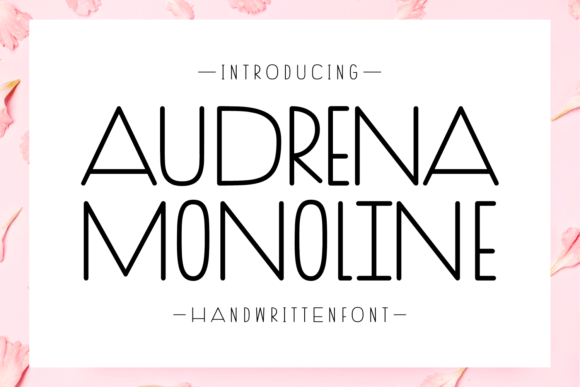
At its core, Audrena Monoline is a handwritten font designed to feel both personal and polished. Unlike overly casual or messy script fonts, it maintains a consistent, clean line weight throughout each character—the "monoline" aspect. This gives it a modern, legible quality while retaining the authentic, slightly imperfect charm of real handwriting. The letterforms have a natural, flowing rhythm with gentle curves and subtle connections, creating a cohesive and inviting text block. It feels friendly and approachable, never stiff or corporate. This balance is key to its versatility; it's a creative font that can be used in professional contexts without feeling out of place.
Where Does Audrena Monoline Work Best?
The true test of any typeface is its application. Audrena Monoline's strength lies in its ability to adapt to projects that benefit from a personal voice. Think of it as a design asset for creating connection.
- Branding and Logo Design: For small businesses, cafés, boutiques, artisans, and personal brands, Audrena Monoline can form the heart of a brand identity. It works beautifully for logos, taglines, and brand marks, immediately conveying a sense of care, creativity, and approachability. It tells customers there's a real person behind the brand.
- Packaging and Product Labels: Imagine this font on a artisanal food label, a handmade soap wrapper, or a boutique candle box. It elevates the product, suggesting quality craftsmanship and attention to detail. It helps a product stand out on the shelf by feeling more intimate than a standard sans serif font or serif font.
- Editorial and Publishing: In editorial design, Audrena Monoline is perfect for pull quotes, chapter titles, or magazine headers. It provides a visual break from body text, drawing the reader's eye and adding a layer of personality to layouts. For bloggers and authors, it can be used for featured images, social media cards, or book cover accents.
- Web and Digital Design: Used judiciously in web design, it can highlight key messages on a homepage, style a call-to-action button, or create engaging headings for a portfolio site. It adds warmth to digital interfaces that can often feel cold and impersonal.
- Marketing and Social Media: This is where Audrena Monoline truly excels. For social media graphics, email headers, promotional flyers, and event invitations, it captures attention quickly. Its handwritten style feels native to platforms built on personal sharing and storytelling, boosting engagement and making content feel more relatable.
- Personal and Craft Projects: Beyond commercial use, it's a fantastic resource for crafters and hobbyists. Think custom wedding stationery, inspirational quote prints, personalized gifts, and DIY projects. It’s a premium font that brings a professional touch to personal creations.
Practical Guidance for Using Audrena Monoline
Choosing the right font is only half the battle; using it effectively is what makes a design successful. Here’s how to approach working with Audrena Monoline.
Evaluating Fit and Font Pairing
First, consider your project's goal. Is it meant to feel whimsical, professional, cozy, or elegant? Audrena Monoline leans toward friendly, creative, and authentic. It’s not the right choice for a formal legal document or a cutting-edge tech startup’s primary interface. Once you’ve confirmed the fit, the next step is font pairing. A handwritten font like this rarely works well as the sole typeface for large amounts of text. Its power is in contrast. Pair it with a clean, simple display font or a highly legible body font. For example:
- With a Sans Serif: A classic combination. Use Audrena Monoline for a main headline and a neutral sans serif like Montserrat or Open Sans for subheadings and body copy. This creates a clear visual hierarchy where the handwritten element draws interest, and the sans serif ensures readability.
- With a Serif: For a more sophisticated or editorial feel, pair it with a elegant serif like Lora or Playfair Display. This works well for wedding invitations, book covers, or boutique branding where a touch of classic elegance is desired.
Testing and Readability
Always test your typography in context. View it at the size it will be used—Audrena Monoline is generally best suited for larger sizes like headings, logos, and short phrases. At small sizes, its handwritten details can become muddy and reduce readability. Check the kerning (spacing between letters) and leading (line spacing) to ensure the text block feels open and easy to scan. Most quality fonts include multiple styles; look for alternates, ligatures, or stylistic sets within Audrena Monoline that can add variety and a more natural flow to your text.
Licensing and Commercial Use
For designers, entrepreneurs, and small business owners, understanding the license is non-negotiable. Audrena Monoline is a commercial font, meaning it requires a license for use in projects that generate revenue, including client work, products for sale, and monetized websites or apps. Ensure you purchase the appropriate license for your needs—whether it’s for a single user, a team, or for embedding in digital products. This is a standard part of professional practice and protects both you and the font creator.
In a digital landscape saturated with sterile, geometric typefaces, a font like Audrena Monoline is a breath of fresh air. It doesn’t just display words; it communicates feeling. By understanding its personality and applying it with intention, you can leverage this modern typography tool to create designs that don’t just look good, but feel genuinely human, fostering a stronger connection with your audience one character at a time.